

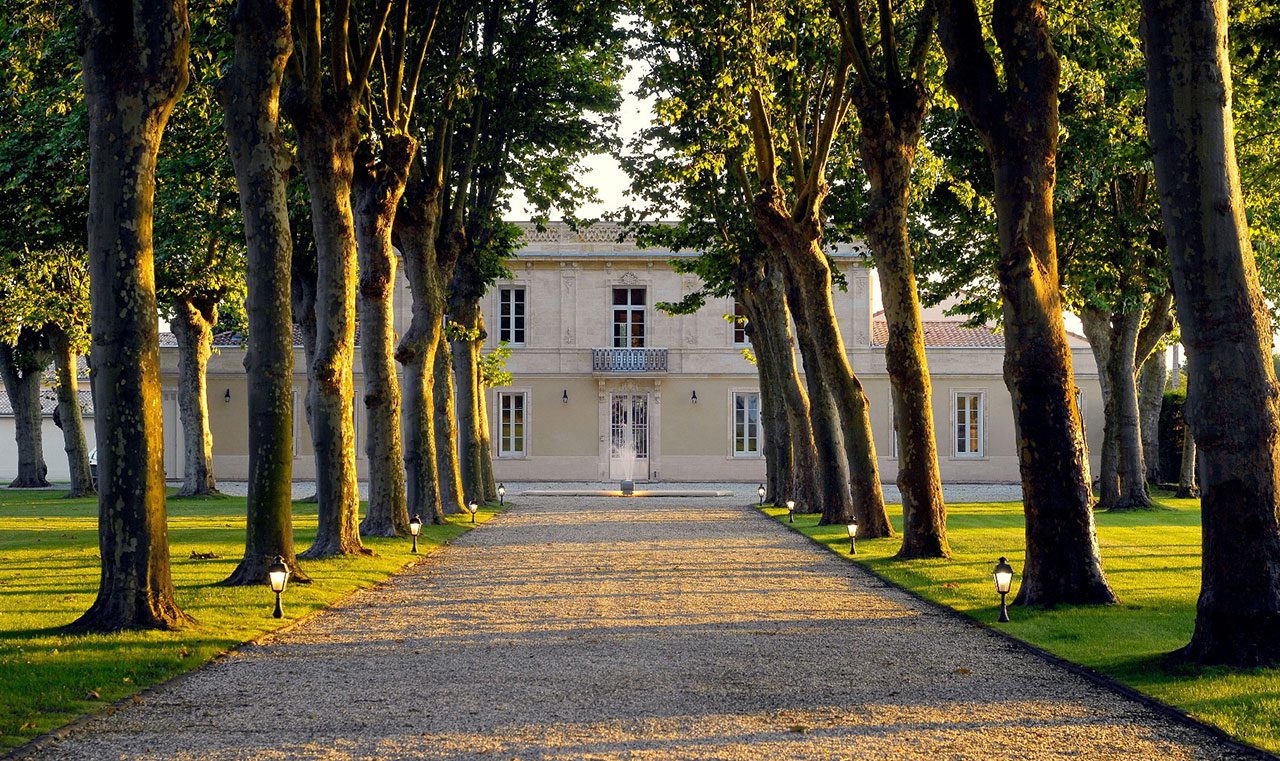
Jean-Michel Garcion: The Quiet Architect of Modern Kosher Bordeaux
Jean-Michel Garcion is one of the most experienced winemakers in kosher Bordeaux. For more than four decades, he has shaped wines at some of the Right Bank’s most respected estates. His work at Château Tour de Baladoz and Château Haut-Breton Larigaudière helped close the quality gap between kosher and traditional Bordeaux. Today, his recent releases show that vision at its peak.
Who Is Jean-Michel Garcion?
Jean-Michel Garcion is a veteran Bordeaux winemaker. He has produced kosher wine for 27 years at Château Haut-Breton Larigaudière. He has also led winemaking at Château Tour de Baladoz for 25 years.
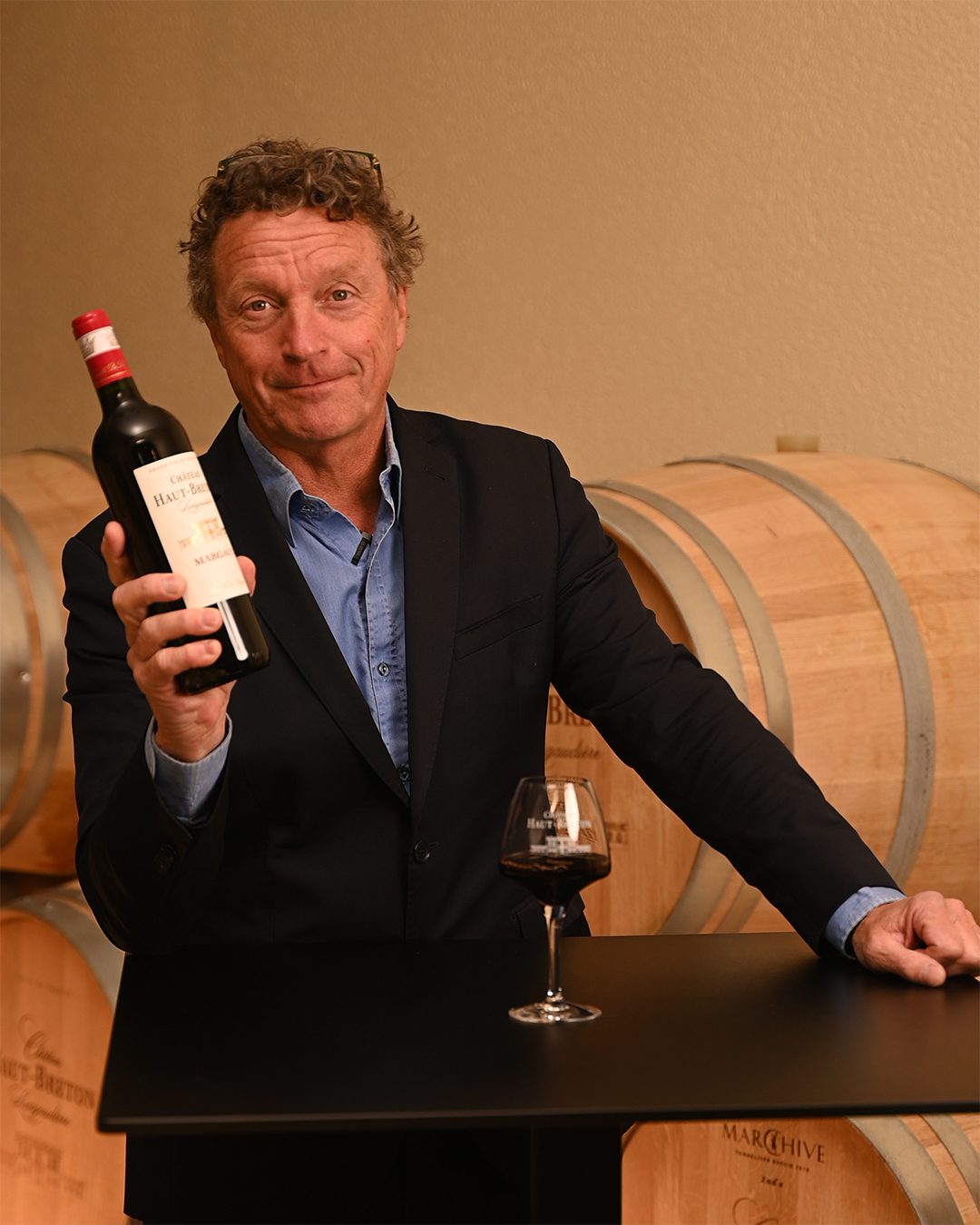
Across more than five decades of combined work, his career has unfolded inside two of the more demanding cellars in the region. Twenty-seven years at Château Haut-Breton Larigaudière. Twenty-five years at Château Tour de Baladoz. Both estates produce kosher wine, which means his entire mature career has been spent inside a constraint that most Bordeaux winemakers never have to consider. Jewish holidays land directly on harvest and fermentation, the most delicate phases of winemaking. During those days, the supervising team cannot intervene. Sometimes three or four consecutive days pass without anyone touching the cellar.
In a traditional cellar, that would be unthinkable. The team works every day during fermentation, performing pump-overs to circulate the wine over the grape skins, monitoring the transformation of sugar into alcohol, adjusting as the wine moves. Garcion has spent decades doing the work without that daily access. He and his team had to adapt their techniques, rethink their methods, and refine their precision until the constraint stopped being a handicap and started being a discipline.
The result is a winemaker who reads vintages with unusual care. He thinks in stylistic categories rather than scores. He describes the shape of a wine, calling 2022 “rectangular” the way a sculptor would describe a block of marble. When he says 2023 is rounder, he means it literally. That kind of vocabulary comes only from decades of paying close attention to what each year actually delivers, and from having to plan a fermentation that can hold its line on its own. Garcion remembers when there was a noticeable difference between kosher and non-kosher Bordeaux. He helped erase it. Today his wines pass blind appellation panels in Saint-Émilion and Margaux alongside their non-kosher peers, judged on identical standards. He takes genuine pride in that arc, and he has earned it.
A Philosophy Shaped by the Atlantic
Bordeaux sits under the influence of the Atlantic Ocean. The region has low elevation, regular humidity, and consistent maritime weather. This oceanic climate rarely produces wines of excessive alcohol or weight.
Instead, it gives Bordeaux a clear signature. The wines are elegant. They show balance between fruit and acidity. They have fine structure and remarkable length on the palate. These qualities allow great Bordeaux to age gracefully. They also form the foundation of every wine Jean-Michel Garcion makes.
“In some years nature does the work. In others, the winemaker decides whether the wine simply succeeds or truly excels.”
The Three Types of Bordeaux Vintages
Jean-Michel Garcion describes Bordeaux harvests through three distinct profiles. This framework captures both the climate and the human element behind each bottle.
1. Fresh Vintages
These are cooler years. Average temperatures stay lower throughout the growing season. Grapes do not always ripen perfectly on their own.
In fresh vintages, vineyard work matters most. Harvest timing matters most. Cellar decisions matter most. Jean-Michel points to 2012 and 2017 as favorites. These are years where the human element separates a great estate from its competitors.
2. Solar Vintages
These are sunny years. The grapes progress smoothly from growth to maturity. Sugar, flavor, and tannin develop with little resistance.
The winemaker steps back in solar vintages. Nature does most of the work. The job becomes one of guidance, not intervention.
3. Timeless Vintages
These are the rare years when everything aligns. Sunlight, temperature, ripening, and harvest timing all come together. The wines achieve a natural equilibrium between fruit, acidity, and structure.
Timeless vintages reward patience. They reveal their complexity slowly over years in the cellar.
The 2023 Vintage in Bordeaux
For Jean-Michel Garcion, 2023 is a solar vintage with a personality of its own. The vines experienced less hydric stress than in 2022. There was enough water for the fruit to ripen slowly and evenly. The struggle of a parched season was absent.
The 2023 wines show vibrant fruit expression and excellent balance. They have natural concentration, supple texture, and lively freshness. On the palate, they feel harmonious and composed. The structure is present, but it never overwhelms the fruit.
2023 vs 2022: A Telling Contrast
Jean-Michel compares 2023 to two celebrated solar years: 2019 and 2015. However, 2023 feels rounder and more generous than either. The wines have an immediate charm.
The contrast with 2022 is striking. The 2022 wines are firm, structured, and powerful. Jean-Michel describes their shape as “rectangular.” The tannins are pronounced. The backbone is built for long aging. The 2023s soften that geometry and lead with fruit.
The Winemaker
Jean-Michel Garcion. Veteran of more than four decades in Bordeaux winemaking.
The Philosophy
Read each vintage on its own terms. Let the Atlantic climate shape balance and length.
The Kosher Legacy
27 years at Château Haut-Breton Larigaudière. 25 years at Château Tour de Baladoz.
The 2023 Signature
A solar vintage with rounder texture, softer tannins, and immediate charm.
How Kosher Bordeaux Has Evolved
Producing kosher wine in Bordeaux requires a particular kind of collaboration. Rabbis and kosher supervisors oversee every step. They ensure the process follows Jewish dietary law.
The Timing Challenge
The greatest challenge lies in timing. Harvest and fermentation are the most delicate phases of winemaking. They often coincide with Jewish holidays. During those days, the supervising team cannot intervene in the cellar.
Traditional cellar teams work daily during fermentation. They perform pump-overs to circulate the wine over the grape skins. They monitor sugar converting to alcohol. They make adjustments as needed. Kosher production cannot always follow that rhythm. Sometimes three or four consecutive days pass without intervention.
Jean-Michel Garcion treated this as an invitation to innovate. Techniques were adapted. Processes were reconsidered. Over time, the constraints sharpened the team’s precision.
Closing the Quality Gap
The transformation over the decades has been remarkable. When Jean-Michel first began producing kosher wines, there was a noticeable difference between kosher and non-kosher bottlings. That distinction has largely disappeared today.
Saint-Émilion and Margaux require blind tasting panels before a wine can carry the appellation name. Kosher wines must pass the same evaluations as traditional wines. They are judged without identification. They must meet identical analytical and sensory standards. In many cases, it is impossible to tell them apart.
“Today, kosher wines stand not as an exception, but simply as great wines of Bordeaux.”
The Current Releases by Jean-Michel Garcion
Four wines define the current portfolio. Each comes from a distinct part of Bordeaux. Each shows a different facet of Jean-Michel Garcion’s craft.
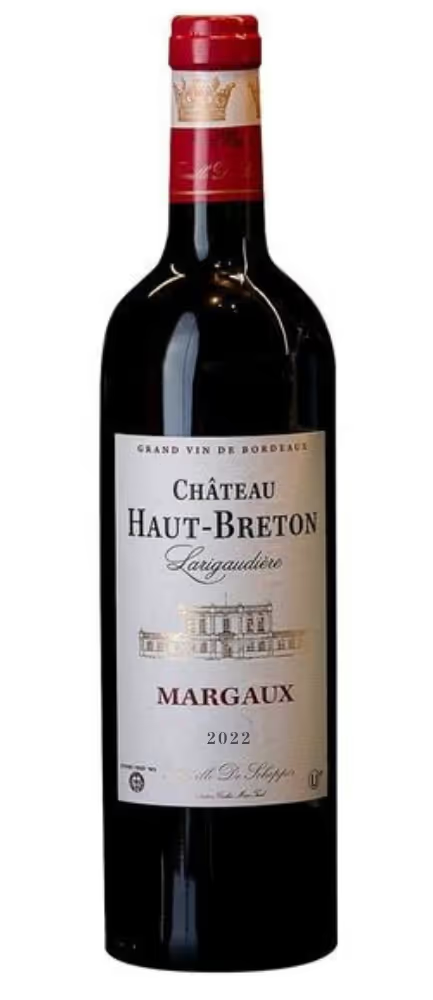
Château Haut-Breton Larigaudière 2022
Margaux is synonymous with gravel, but the appellation is far from limited to one soil type. Its terroirs are remarkably diverse. The vineyards of Haut-Breton encompass over 33 different plots. Each plot is planted with grape varieties matched to the specific characteristics of its soil.
Deep sandy-gravel soils in the sub-commune of Arsac produce ethereal wines. Clay-gravel soils in the Grand Soussans give wines a fine tannic structure. This patchwork of terroirs is the foundation of the estate’s complexity.
The 2022 vintage in Margaux was defined by an exceptionally hot, dry summer punctuated by three heatwaves. A wet, cold winter had replenished groundwater beforehand. A brief spring frost had little impact on vine earliness. Flowering was early and uniform under dry conditions. Disease pressure was very low. A touch of late-summer rain helped keep ripening on track.
Harvest began early. With fine weather, estates could pick at their own pace. Drought and heat contributed to lower yields than usual, but the resulting wines combine concentrated, ripe fruit with surprising freshness and finely textured tannins.
The 2022 Château Haut-Breton Larigaudière opens with lifted aromas of cassis, blackberry, and violets. Subtle graphite and cedar frame the fruit. On the palate, it shows the hallmark elegance of Margaux wrapped in the power of the 2022 vintage. Dense black fruit meets polished oak. Finely grained tannins carry through a long, structured finish.
Despite the warmth of the year, the wine retains freshness and poise. Layers reveal themselves gradually as the wine opens. Decanting for one to two hours allows the fruit and floral notes to emerge fully, while the underlying structure promises a long evolution in the cellar. This is Haut-Breton at its most complete, combining immediate generosity with true aging potential.
Pairing: Dry-aged ribeye, roasted lamb shoulder, or aged hard cheeses.
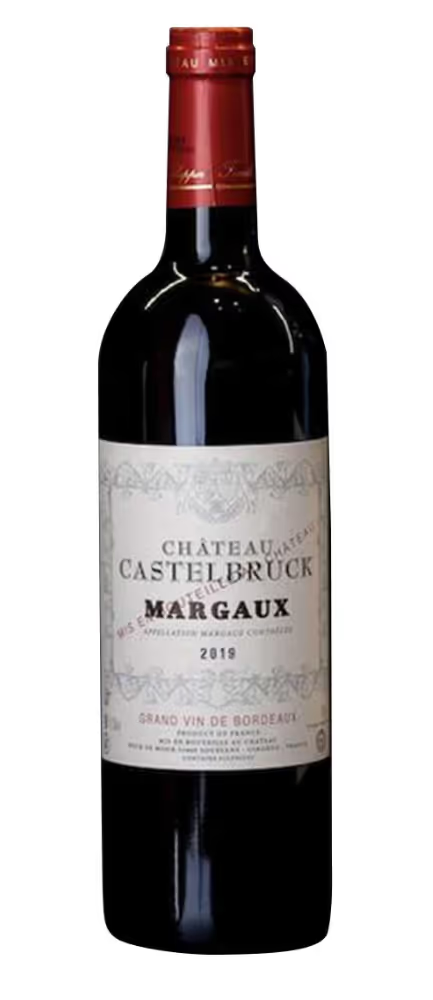
Château Castelbruck 2023
In Margaux, elegance is everything. Château Castelbruck captures that signature beautifully. The vineyards sit in Soussans on classic Margaux soils. Gravel and sand layer over clay. This terroir naturally favors Cabernet Sauvignon. It delivers structure with finesse.
The De Schepper family farms the estate with a strong environmental commitment. They earned High Environmental Value certification. They maintain traditional vineyard practices that preserve the vitality of the land.
The 2023 blend is 65% Cabernet Sauvignon and 35% Merlot. Fermentation is slow, in concrete and stainless steel. This preserves aromatic purity. The wine then ages in oak barrels, most of them new, to refine texture and complexity.
The wine opens with vibrant aromas of red currant and wild berries. Subtle vanilla and soft oak follow. The palate is poised and structured. It delivers the hallmark Margaux balance of power and elegance. The finish is fresh, lifted, and refined.
Pairing: Roasted lamb, duck, or grilled steak.
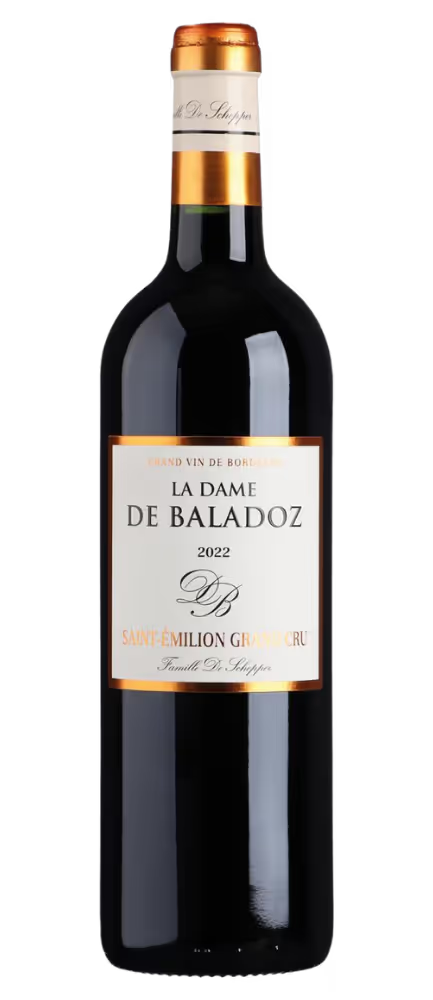
La Dame de Baladoz 2023
La Dame de Baladoz is the graceful expression of the Baladoz estate. It is a Saint-Émilion Grand Cru that emphasizes the richness and charm of the Right Bank.
The vineyards lie in Saint-Laurent-des-Combes, just outside the village of Saint-Émilion. They are planted on prized clay-limestone soils. These soils bring depth and texture to Merlot-dominant wines. Sustainable practices and careful canopy management protect both ecosystem and fruit quality.
The blend is 90% Merlot and 10% Cabernet Franc. Each parcel is vinified separately. The wine then ages entirely in oak barrels for up to 18 months. This builds structure and polish.
The result is a beautifully textured wine. The palate is rich and full. It echoes the sensation of biting into perfectly ripe grapes. Silky tannins frame layers of dark fruit. Subtle oak notes lead into a long, graceful finish. This is Saint-Émilion at its most inviting.
Pairing: Braised meats, mushroom dishes, or slow-roasted brisket.
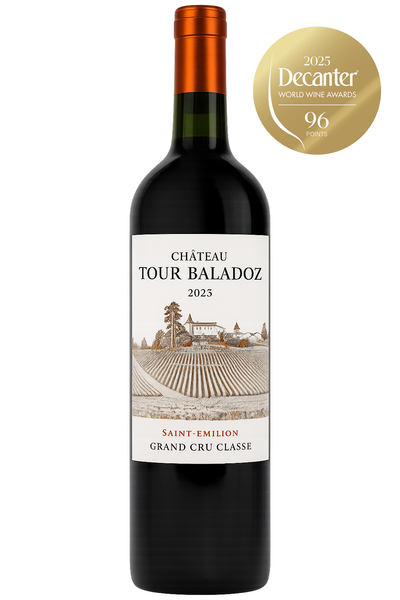
Château Tour Baladoz 2023
Château Tour Baladoz stands among the classified growths of Saint-Émilion. It combines historic terroir with meticulous modern winemaking. The vineyard spans the limestone plateau and slopes of Saint-Laurent-des-Combes. These soils are prized for producing wines with both power and precision.
The De Schepper family farms the estate with environmentally responsible methods. These methods respect the ecosystem and sustain the health of the vines.
The blend leans heavily toward Merlot. Cabernet Franc, Cabernet Sauvignon, and a touch of Petit Verdot complete the picture. Each parcel is vinified individually. The wine then spends about fifteen months in French oak barrels, most of them new. This adds complexity and refinement.
The wine shows impressive depth. Dark fruit, plum, and blackberry meet subtle spice and polished oak. The structure is firm yet refined. Layered tannins lead into a long, elegant finish. The aging potential is excellent.
Pairing: A celebratory meal or a collector’s cellar.
★ The Cellar Has Spoken
This vintage has sold out. The collectors got there first. Bookmark the page, sign up for restock alerts, or set your sights on the next release. When a wine moves like this, you don’t blame the bottle.
Discover the Garcion Releases
Explore the wines that show why Jean-Michel Garcion has shaped a generation of kosher Bordeaux.
Frequently Asked Questions
Who is Jean-Michel Garcion?
Jean-Michel Garcion is a veteran Bordeaux winemaker. He has produced kosher wine for 27 years at Château Haut-Breton Larigaudière and 25 years at Château Tour de Baladoz. He is widely regarded as one of the leading voices in modern kosher Bordeaux.
What wines does Jean-Michel Garcion make?
His current portfolio includes the 2022 Château Haut-Breton Larigaudière from Margaux, plus three 2023 kosher Bordeaux releases: Château Castelbruck from Margaux, and La Dame de Baladoz and Château Tour Baladoz from Saint-Émilion.
How does the 2023 Bordeaux vintage compare to 2022?
Jean-Michel describes 2022 as “rectangular,” with firm structure and pronounced tannins built for long aging. The 2023 vintage is rounder and more generous. It leads with fruit, balance, and immediate charm while still holding the structure needed to age.
What makes the 2022 Haut-Breton Larigaudière special?
The 2022 Haut-Breton Larigaudière captures a hot, dry Margaux vintage where three heatwaves and lower yields produced wines of unusual concentration. It pairs the dense black fruit and structure of the year with the freshness and finely grained tannins that define Margaux. The estate’s 33 plots, each matched to a specific soil type, give the wine its layered complexity. This is Garcion’s “rectangular” 2022 in its most complete form.
Can kosher Bordeaux compete with traditional Bordeaux?
Yes. In appellation tasting panels for Saint-Émilion and Margaux, kosher wines are judged blind alongside traditional wines. They must meet the same standards. According to Jean-Michel Garcion, the quality gap that once existed has largely disappeared.